
Sometimes you get no second chance and it’s best to accept the gifts the world offers you. – Paolo Coelho
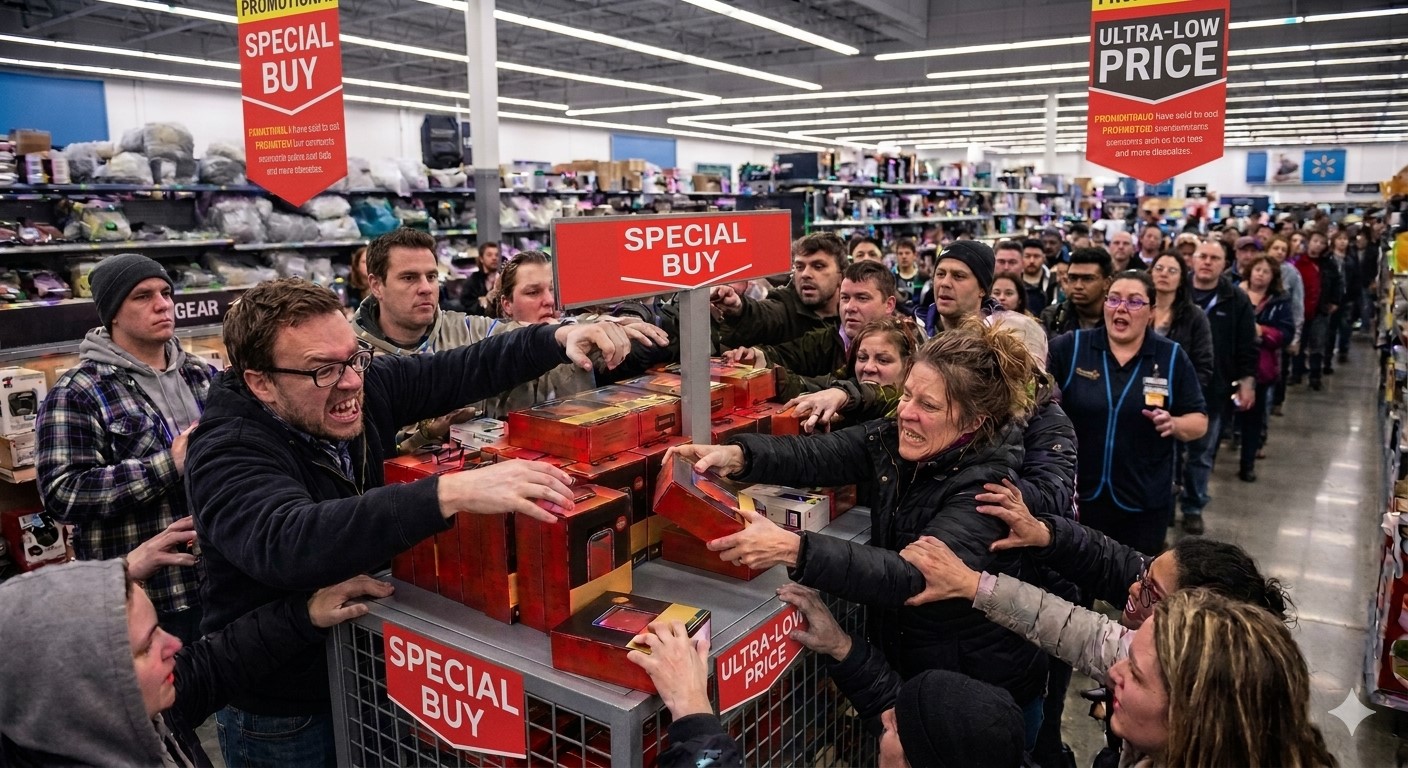
Special Buy! Hot Deal! While Supplies Last!
These are the items that are brought in for a limited time to drive sales, traffic and GMROI. They go by different names: One Time Buys, Promotional Items or Opportunity Buys. Sometimes they complement the core assortment, sometimes they seem to have no business being in the store at all. As a customer, they often leave you asking: “How the hell is anybody making money on this?”
They generally originate in the packed warehouse of a manufacturer or distributor who perhaps misjudged the market. They now have tons of stock that’s not moving and they need someone – anyone – who can take it off their hands (and their balance sheet) and clear some space. And the only way to clear out that much stock so quickly is to call up a retailer with the store network and infrastructure to take it all at once.
But they need to make it worth the retailer’s while to set the item up in their systems and utilize the space in their trucks, warehouses and stores to get it in the hands of consumers without (hopefully) being stuck with excess stock themselves. This usually culminates in an offer from the supplier: “Take it all (or a large chunk of it) off my hands now and I’ll charge you pennies on the dollar – but I’ll need the purchase order by Friday.”
Retail buyers receiving offers like these now have a decision to make. If they can set a selling price that will allow them to sell through it quickly, not cannibalize their core products too much, and turn a profit on it (factoring in the additional supply chain and administrative costs), then it’s a go. It’s basically a boost in their sales and GMROI numbers with limited risk. Not to mention the traffic these items can drive to the store, adding more incremental sales across the range.
Supply chain folks – while understanding that these products can be good for the business overall – are generally less enthused about figuring out how to push a basketball through a garden hose.
This is the part where well meaning people can make dealing with these items more difficult than it needs to be. We’re buying it once and never replenishing it again. We’re not trying to maintain an in stock target for them (running out is a cause for celebration, not concern). There’s really no point in developing forecasts and plans, so let’s just bypass the planning system altogether. Get them into the DC and then just push them out to the stores!
While it’s true that the purchase may not be planned in advance – they really sort of just drop into your lap – the newly purchased product still needs to get all the way into the customer’s shopping basket. Why “push it all out at once”, when there may be an opportunity to hold some back in the DC and allow the stores who are selling it faster to pull it? This can put all the cash into your hands faster overall and avoid obsolescence and further markdowns to clear it.
Most retailers who invest in planning systems don’t want to just use them to manage inventory balances. Significant value comes from being able to convert and roll up numbers from the elemental level to manage all of these key resources of the business (cash, labour and capacities) that are consumed to get products into customers’ hands. But this only works if the plans contain everything that will consume those resources – including the one time buy items.
Sales, transportation, capacity and space plans that don’t include these items will have large gaps in them that need extra effort, assumptions and “fudge factors” to fill in. Why wouldn’t you just include them in the plans in the first place? It’s not as arduous a task as you might think.
To begin with, these items will need to be set up with item numbers, supplier codes, pricing, costing, descriptions, UPCs and logistical attributes in various systems anyhow (ERP, WMS, POS, Online Store, etc).
Retailers using planning systems already have processes for setting up new items that can be used for any new one-time buy item:
- Model the new item based on an existing item by copying and scaling sales history to calculate a forecast
- Set a start selling date on the new item so that the forecast is zero until the item is expected to be on the shelf at the stores
- Set a future dated minimum stock level for each store with an effective date on or before the start selling date – for a one time buy, this could be as simple as “everybody gets 1 pallet each to start”
Similarly, when an obsolete item is leaving the assortment, a final purchase date is set after which there will be no more replenishment from suppliers into the DCs. The planning system will then model the runout of stock from each DC based on planned outbound shipments to the stores, followed by the runout of stock in each stores based on sales to customers.
We generally think of the full product lifecycle as a period of months or years between introduction and discontinuation, but it doesn’t have to be. For a one-time buy item, you would just plan them both simultaneously – set it up as you would any new item, then apply a final purchase date equal to the day the one and only purchase order is due to land in the distribution centre. After that, allow the planning system to plan the flow from the DC into each store, adjusting the forecasts and plans as the sales materialize and updating the runout date for each store:

With these couple of extra steps (for which you have processes and procedures already), you can:
- Actively manage the flow of goods from the DCs to the stores based on how each store is performing
- Have an up-to-date view on how long it will take each store to sell through their one-time buy items
- Manage your non-inventory resources to get the products from the receiving door of the DCs into customers’ hands as visibly and efficiently as possible
While “buy it and push it” might sound like a simple shortcut, it’s one that’s not really worth taking if you consider all of the benefits of planning. Plus, when you add up the additional manual work it requires, it may not wind up being a short cut at all.